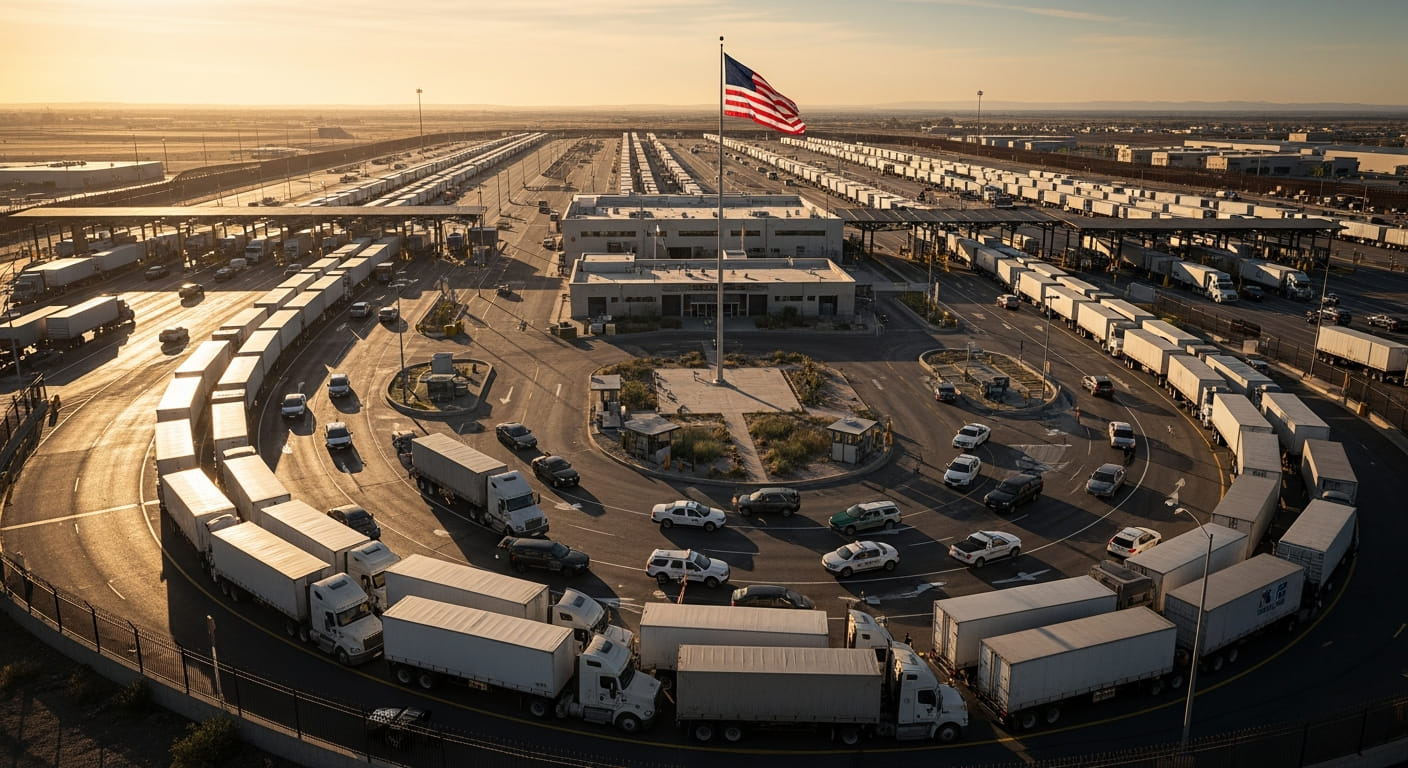
Sanctions & OFAC Compliance Guide 2026
Essential Sanctions & OFAC compliance guidance for 2026 importers and freight forwarders.
Essential Sanctions & OFAC compliance guidance for 2026 importers and freight forwarders.
As a Senior Trade Compliance Analyst for TradeShield AI, I’ve witnessed firsthand the accelerating pace and complexity of global sanctions. The landscape in March 2026 is one of unrelenting vigilance, where the smallest oversight can trigger colossal penalties and reputational damage. For freight forwarders, importers, and compliance professionals, understanding and navigating the intricacies of OFAC, EU, and UN sanctions is no longer merely good practice – it’s an existential imperative.
The past year, and indeed the trajectory into 2026, has underscored a critical truth: sanctions compliance is a moving target, demanding dynamic solutions. From the sustained pressure on geopolitical adversaries to the increasing sophistication of illicit finance networks, the challenges are multifaceted. Here at TradeShield AI, we’re committed to arming you with the intelligence and tools to not only meet these challenges but to thrive amidst them.
As we navigate March 2026, the global sanctions landscape remains a crucible of evolving regulations, heightened enforcement, and persistent geopolitical tensions. The “new normal” is defined by a dynamic and aggressive approach from key authorities, with the U.S. Office of Foreign Assets Control (OFAC), the European Union (EU), and the United Nations (UN) continuing to expand their reach and impose significant penalties. The past year, particularly 2025, served as a stark reminder of the global commitment to enforcing these critical foreign policy tools.
A primary driver of this sustained intensity is the ongoing international response to Russia’s actions, which continues to dominate the headlines and regulatory efforts. The UK, EU, and US sanctions on Russia have seen continuous refinement and expansion since early 2022, creating an intricate web of restrictions impacting everything from financial transactions to specific sectors like energy, technology, and defense (Source 1). As highlighted in “The State of OFAC Sanctions Enforcement in 2025-26,” authorities are not merely maintaining these sanctions but are actively targeting their evasion through third countries and complex corporate structures (Source 2). This has led to an increased focus on jurisdictions previously considered low-risk, as well as a greater emphasis on identifying ultimate beneficial ownership (UBO) to uncover hidden affiliations with sanctioned parties.
Enforcement actions in 2025 were both numerous and substantial, reflecting a clear commitment to penalizing non-compliance across various industries. One notable case that sent ripples through the financial technology sector was the $30 million fine levied against Bittrex, a crypto exchange, for US sanctions violations (Source 4). This penalty underscored OFAC’s unwavering attention to emerging technologies and digital assets as potential avenues for illicit finance, setting a clear precedent for companies operating in the burgeoning crypto space. It also illustrated OFAC’s readiness to impose multi-million dollar penalties even when companies eventually cooperate, emphasizing the need for robust controls from inception.
Beyond the headline-grabbing fines, “2025 in Review: Key Developments within International Trade Enforcement, and Looking Ahead to 2026” detailed a broader trend of increased scrutiny on supply chain integrity and export control compliance (Source 3). Regulators are looking beyond direct transactions, investigating the entire ecosystem of trade, including logistics providers, insurers, and financial facilitators. This holistic approach means that even companies far removed from the initial transaction can find themselves entangled in sanctions violations if they fail to perform adequate due diligence. The “Month in International Trade – December 2025” further confirmed this trend, noting additional designations across various programs and sustained focus on human rights abuses and cyber threats as grounds for sanctions (Source 5).
Furthermore, a significant development in 2025 was OFAC’s launch of a new Voluntary Self-Disclosure Portal (Source 6). While seemingly a procedural update, this portal signals OFAC’s continued commitment to transparency and encourages companies to proactively report potential violations, often leading to reduced penalties. This move aligns with a broader strategy of fostering a culture of compliance while simultaneously streamlining the enforcement process. The message is clear: regulators expect companies to not only understand the rules but to have robust internal mechanisms to identify and address any lapses. As we move through 2026, the expectation is for this aggressive enforcement posture to continue, with a focus on cutting off all avenues of support for sanctioned regimes and individuals, regardless of industry or geographic location.
For importers and freight forwarders, the escalating sanctions landscape in 2026 translates directly into tangible business impacts, operational risks, and severe financial exposure. The complexities introduced by constantly updated sanctions lists and evolving enforcement priorities mean that traditional compliance methods are simply no longer sufficient.
Firstly, operational risks have surged. Freight forwarders are on the front lines, managing cargo movements, vessel bookings, and payment flows. Every entity in the supply chain – from the consignor and consignee to the vessel owner, port authority, and even sub-contracted truckers – must be screened against OFAC, EU, and UN sanctions lists. Failure to do so can result in immediate cargo delays, seizure of goods, and refusal of services by upstream providers (e.g., banks refusing payment, shipping lines refusing to load). Such delays ripple through the supply chain, incurring demurrage, detention charges, and frustrated customers. A prime example from 2025 was the heightened scrutiny on vessel tracking and ownership, where vessels with even indirect ties to sanctioned entities were flagged, leading to diversions and significant operational headaches.
Secondly, the financial exposure is immense. The $30 million fine against Bittrex (Source 4) serves as a stark reminder of the financial penalties awaiting non-compliant companies, regardless of sector. While Bittrex was a crypto exchange, the precedent for multi-million dollar fines extends to freight and trade. For a freight forwarder, facilitating a shipment involving a sanctioned party, even inadvertently, can result in penalties that quickly dwarf the value of the freight contract. These fines are often accompanied by legal fees, investigative costs, and the potentially crippling loss of banking relationships. Beyond direct fines, there’s the cost of lost business due to reputational damage. Once a company is associated with a sanctions violation, winning new clients or maintaining existing ones becomes exponentially harder. Insurance costs can also skyrocket, and the ability to obtain financing may be hampered.
Thirdly, case examples from 2025 revealed a greater focus on “indirect” violations. Regulators are increasingly scrutinizing scenarios where a seemingly clean transaction might involve a sanctioned party further down the line or where goods are re-exported to prohibited destinations. For instance, a freight forwarder arranging transport for components that eventually end up in a sanctioned country’s military program, even without direct knowledge, could face severe repercussions if due diligence was insufficient. This requires freight forwarders to not just screen their direct counterparties but to understand the entire transaction lifecycle and the ultimate end-user of the goods. The challenge is intensified by evasive tactics employed by sanctioned entities, such as using shell companies, changing vessel flags, or obscuring ownership, demanding sophisticated screening capabilities to detect these hidden risks.
Customs brokers and the dedicated compliance teams within importing companies are now operating under an unprecedented level of scrutiny and responsibility. As the guardians of international trade compliance, their roles have expanded dramatically, encompassing complex due diligence, intricate documentation, and proactive risk mitigation.
The most significant shift is in liability. In the current environment, the concept of “willful blindness” is aggressively challenged by regulators. Customs brokers, as intermediaries facilitating trade, are expected to perform thorough due diligence on behalf of their clients, and indeed, on their clients themselves. This means verifying not just the Harmonized Tariff Schedule (HTS) codes and country of origin but also screening all parties involved against OFAC, EU, and UN sanctions lists. Failure to identify a sanctioned entity or a prohibited transaction can result in the broker being held jointly liable for violations, leading to significant fines and the potential loss of their customs license. The “2025 in Review” highlighted this broadening of liability, noting that enforcement actions increasingly targeted all facilitators of illicit trade, not just the primary actors (Source 3).
Documentation requirements have become more onerous and precise. Every step of the compliance process must be meticulously recorded. This includes records of all counterparty screenings, the methodology used (e.g., date, time, list consulted, specific matches found or cleared), due diligence conducted on ultimate beneficial ownership, and end-use statements. In the event of an audit or investigation, the absence of comprehensive and auditable documentation is often as damaging as a direct violation, as it indicates a lack of reasonable care. The launch of OFAC’s new Voluntary Self-Disclosure Portal (Source 6) further underscores the importance of a well-documented compliance program, as companies that can demonstrate robust internal controls and prompt disclosure are likely to receive more favorable treatment.
Furthermore, audit risk is at an all-time high. Regulators, armed with advanced data analytics and intelligence, are increasingly conducting targeted audits based on risk indicators such as trade patterns, high-risk jurisdictions, or commodity types. Customs brokers and compliance teams must be perpetually “audit-ready,” capable of quickly producing detailed evidence of their compliance processes and decisions. This includes demonstrating not only that screenings were performed but that the results were properly adjudicated, and that any potential red flags were thoroughly investigated. The pressure is on to prove that a comprehensive, risk-based approach to sanctions compliance is integrated into every aspect of operations, protecting both the client and the broker from severe repercussions.
The biggest risks in 2026 revolve around the dynamic expansion of sanctions lists, particularly those targeting Russia (Source 1) and other geopolitical flashpoints, leading to increased potential for inadvertent transactions with designated entities. Furthermore, the aggressive enforcement against evasion tactics, including the use of shell companies, third-country transshipments, and emerging technologies like cryptocurrency (as seen with the Bittrex fine, Source 4), poses significant challenges in identifying true beneficial ownership and ultimate destinations. Indirect exposure through supply chain partners and the increasing liability placed on intermediaries like freight forwarders and customs brokers also represent major areas of concern.
Fines for OFAC sanctions violations are severe, potentially reaching hundreds of millions of dollars, with civil penalties typically up to $350,000 per violation or twice the amount of the transaction, whichever is greater, and criminal penalties up to $1 million per violation and 20 years imprisonment. The $30 million fine against Bittrex in 2025 (Source 4) illustrates the substantial financial impact. EU and UN sanctions violations also carry significant financial penalties, which vary by member state but can include millions in fines and lengthy prison sentences for individuals involved, alongside asset forfeiture and severe reputational damage.
TradeShield AI provides a robust, real-time solution for navigating the complex sanctions landscape. Our platform conducts continuous, automated screening against consolidated OFAC, EU, and UN sanctions lists, as well as over 1,000 other denied party lists, ensuring no new designations slip through. We go beyond basic name matching by offering advanced features like screening against 10-digit HTS codes for specific product restrictions, calculating Section 301/232 surcharges for comprehensive compliance, and generating detailed PDF compliance reports for audit-ready documentation, all designed to identify and mitigate risks dynamically.
Ready to protect your shipments? Run a free compliance scan with TradeShield AI and get your full risk report in 60 seconds.
Essential Sanctions & OFAC compliance guidance for 2026 importers and freight forwarders.
Sanctions & OFAC compliance guidance for 2026.

Essential Global Trade Enforcement compliance guidance for 2026 importers and freight forwarders.
Global Trade Enforcement compliance guidance for 2026.