Sanctions & OFAC Compliance Guide 2026
Essential Sanctions & OFAC compliance guidance for 2026 importers and freight forwarders.
Essential Sanctions & OFAC compliance guidance for 2026 importers and freight forwarders.
March 2026
The global trade landscape continues its rapid evolution, driven by geopolitical shifts, technological advancements, and an ever-intensifying regulatory environment. For freight forwarders, importers, and the compliance professionals supporting them, one area demands constant vigilance above all others: economic sanctions. The Office of Foreign Assets Control (OFAC) in the United States, alongside the European Union (EU), the United Nations (UN), and other national authorities, wields immense power, with enforcement actions in 2025 setting a clear precedent for an even more aggressive 2026.
At TradeShield AI, we understand that staying ahead of these complex and often fluid regulations isn’t just a best practice – it’s a necessity for survival in international trade. As a senior trade compliance analyst, I’ve observed firsthand the critical challenges businesses face. From identifying newly designated entities to meticulously screening every counterparty, the stakes have never been higher. This comprehensive guide will equip you with the insights and strategies needed to navigate the sanctions minefield successfully in the coming year.
As we navigate the first quarter of 2026, the international sanctions landscape remains one of volatility and heightened regulatory scrutiny. The prevailing sentiment from regulatory bodies is clear: enforcement is paramount, and the net is widening. Corporate Compliance Insights, in its comprehensive review of “The State of OFAC Sanctions Enforcement in 2025-26,” highlighted a period characterized by aggressive actions and a focus on expanding the scope of compliance obligations (Source 2). This trend is unlikely to abate, with March 2026’s “Weekly Sanctions Update” from Steptoe already detailing fresh designations and enforcement actions, underscoring the dynamic nature of these regulations (Source 1).
A significant focus for OFAC and its international counterparts throughout 2025, continuing into 2026, has been the concerted effort to cripple Russia’s war economy. This involves relentless targeting of entities and individuals supporting the Kremlin, their financial networks, and their access to critical technologies. Similarly, sanctions against Iran, North Korea, Cuba, Venezuela, and Syria remain stringent, with regulators actively seeking out any pathways for circumvention. The “2025 in Review” by Foley Hoag also noted the ongoing complexities introduced by these geopolitical priorities, leading to more intricate and often overlapping sanctions regimes (Source 3).
Beyond traditional nation-state adversaries, a notable evolution in enforcement during 2025, and a key area for 2026, involves the virtual asset sector. Corporate Compliance Insights reported in late 2025 on significant resolutions reached by the DOJ and FinCEN with virtual asset trading platforms for Anti-Money Laundering (AML) violations, often intrinsically linked to sanctions evasion (Source 6). This signals a clear message: the ‘Wild West’ days of crypto are over, and these platforms are now firmly within the crosshairs of sanctions enforcement.
The financial repercussions for non-compliance have been staggering. December 2025 saw a flurry of enforcement activities, as detailed by Crowell & Moring LLP’s “The Month in International Trade,” culminating in substantial penalties (Source 4). While specific figures fluctuate, 2025 saw OFAC issue some of its largest penalties to date, reflecting a ‘no-tolerance’ approach. For instance, JD Supra spotlighted “2025’s Largest Penalty (So Far),” which alone reached into the tens of millions of dollars, indicating the scale of financial exposure (Source 5). These actions demonstrate a clear shift towards holding companies accountable for systemic compliance failures, rather than just isolated incidents. The global convergence of enforcement efforts, with OFAC collaborating closely with EU and UN bodies, further amplifies the risk, creating a formidable and unified front against sanctions violations.
For importers and freight forwarders, the escalating sanctions environment translates directly into tangible operational risks and significant financial exposure. The days of simply checking a list once are long gone; today’s environment demands continuous, robust vigilance.
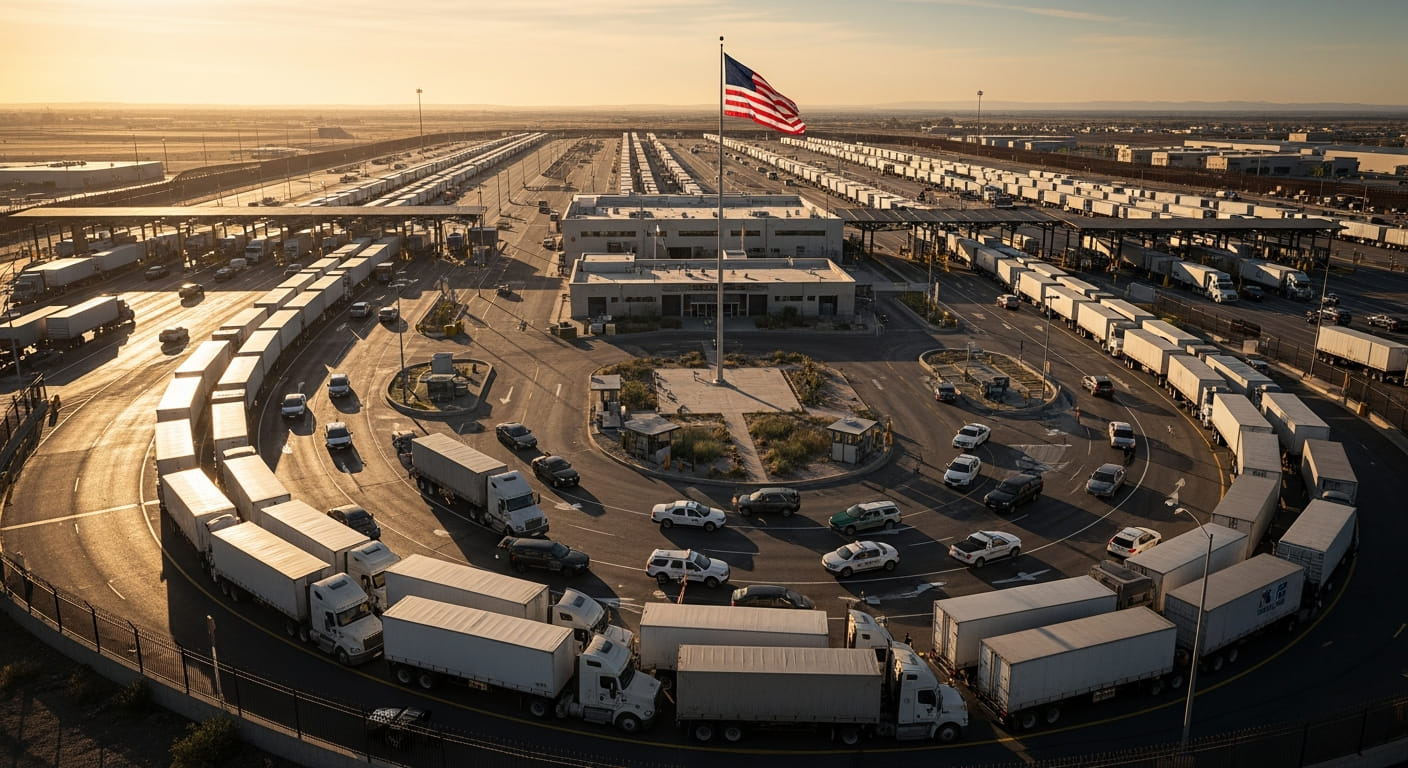
One of the most immediate business impacts is the potential for shipment delays and seizures. If a shipment involves a sanctioned entity, a vessel linked to a sanctioned owner, or goods destined for a prohibited end-user or jurisdiction, it faces immediate detention by customs authorities. This doesn’t just halt the flow of goods; it can lead to spoilage of perishables, missed deadlines, breach of contract, and ultimately, loss of customer trust. Freight forwarders, as facilitators of these movements, bear a heavy responsibility for ensuring the legality of every transaction.
Beyond delays, the financial exposure is immense. Monetary penalties are the most obvious threat. As highlighted by JD Supra, 2025 witnessed OFAC taking “Action Against a Freight Forwarder” as part of its enforcement spotlight (Source 5). While the specific details vary, such actions often stem from insufficient due diligence regarding counterparties, transshipment points, or ultimate consignees. These penalties can range from hundreds of thousands to tens of millions of dollars, depending on the severity and nature of the violation. Beyond direct fines, companies incur substantial legal fees to defend against allegations, reputational damage that can impact future business, and the costly process of remediation and implementation of new compliance programs.
Operational risks also multiply. Vetting every partner in the supply chain – from upstream suppliers and manufacturers to carriers, consignees, and banks – becomes a complex, resource-intensive task. The rise of “ghost fleets” and intricate corporate ownership structures designed to obscure beneficial ownership makes identification incredibly challenging. Furthermore, the use of virtual assets in trade finance, while offering efficiency, now carries an amplified risk due to increased regulatory scrutiny and enforcement actions against virtual asset trading platforms, as documented by Corporate Compliance Insights (Source 6). Importers must now scrutinize not just the physical goods and parties, but also the payment mechanisms. A misstep can lead to frozen funds, blacklisted operations, and severe disruptions to global supply chains.
Customs brokers and the dedicated compliance teams within freight forwarding and import companies are unequivocally on high alert in March 2026. The regulatory pendulum has swung decisively towards increased accountability for intermediaries, fundamentally shifting the landscape of liability.
The most significant change is the shift in liability. Regulators like OFAC are increasingly holding customs brokers and freight forwarders responsible for sanctions violations, even when they may not be the direct party to the prohibited transaction. The expectation is that these trade facilitators, by virtue of their expertise and position in the supply chain, possess the capability and responsibility to conduct thorough due diligence. This means a broker cannot simply rely on information provided by the importer if red flags are present or if their own screening processes are inadequate. The “Action Against a Freight Forwarder” noted by JD Supra in 2025 serves as a stark reminder that these intermediaries are no longer just pass-through entities but critical gatekeepers in the sanctions enforcement ecosystem (Source 5).
This increased liability necessitates far more stringent documentation requirements. Every step of the transaction – from initial inquiry to final delivery – must be meticulously documented to demonstrate due diligence efforts. This includes records of sanctions screening results, communications with parties, internal risk assessments, and any remedial actions taken. In the event of an audit or investigation, the ability to present a clear, comprehensive, and defensible audit trail is paramount. Without it, companies risk being unable to prove they acted responsibly, potentially leading to findings of “willful blindness” or “reckless disregard.” Foley Hoag’s “2025 in Review” noted the increasing importance of robust record-keeping as a key defense strategy (Source 3).
Finally, the pervasive threat of audit risk is a constant motivator. OFAC, along with other agencies, is actively conducting audits and investigations, often triggered by tips, suspicious activity reports (SARs), or routine data analysis. The penalties for violations discovered during an audit can be severe, compounding the financial and reputational damage. Compliance teams are under immense pressure to implement proactive, robust internal controls, conduct regular internal audits, and ensure continuous training for all relevant personnel. The goal is not just to detect violations but to prevent them altogether, demonstrating a culture of compliance that can mitigate penalties should an inadvertent issue arise.
The biggest risks in 2026 include the rapid pace of new designations targeting Russia and its facilitators, increasing scrutiny on virtual asset transactions used for sanctions evasion, and a broader interpretation of “facilitation” that holds intermediaries like freight forwarders more accountable. Furthermore, the aggressive multi-agency and international enforcement efforts mean inadvertent violations are highly likely to be detected, leading to significant penalties and reputational damage for businesses failing to adapt to the dynamic threat landscape.
Fines and penalties for sanctions violations are severe and can vary widely based on the jurisdiction, the nature of the violation (civil vs. criminal), and whether it was willful. OFAC civil penalties can range from thousands to hundreds of millions of dollars per violation, with “willful” violations incurring even higher criminal penalties, including imprisonment for individuals. For instance, 2025 saw OFAC issue a penalty in the tens of millions for a single company, and various enforcement actions against virtual asset platforms often involve multi-million dollar settlements (Source 5, 6). The statutory maximum penalties for OFAC violations can reach up to $356,574 per violation or twice the amount of the underlying transaction, whichever is greater, alongside potential criminal charges that carry separate, substantial monetary penalties and lengthy prison sentences.
TradeShield AI provides a comprehensive, intelligent solution to mitigate Sanctions & OFAC risks. Our platform offers real-time OFAC, EU, and UN sanctions screening against global watchlists, ensuring your counterparties are continuously monitored against the latest designations. We integrate seamlessly with your trade data, enabling screening against 10-digit HTS codes to identify dual-use goods or restricted product classifications. Beyond sanctions, TradeShield AI also provides Section 301/232 surcharge calculation, critical for understanding total landed costs, and generates comprehensive, auditable PDF compliance reports, simplifying your record-keeping and demonstrating due diligence for regulatory scrutiny.
Importers should take three concrete, actionable steps immediately:
Ready to protect your shipments? Run a free compliance scan with TradeShield AI and get your full risk report in 60 seconds.
Essential Sanctions & OFAC compliance guidance for 2026 importers and freight forwarders.
Sanctions & OFAC compliance guidance for 2026.

Essential Global Trade Enforcement compliance guidance for 2026 importers and freight forwarders.
Global Trade Enforcement compliance guidance for 2026.