
Global Trade Enforcement Compliance Guide 2026
Essential Global Trade Enforcement compliance guidance for 2026 importers and freight forwarders.
Global Trade Enforcement compliance guidance for 2026.
By the TradeShield AI Expert Team March 2026
The global trade landscape in 2026 is less a calm sea and more a turbulent ocean. For manufacturers, navigating these waters demands foresight, diligence, and robust compliance strategies. U.S. Customs and Border Protection (CBP) has solidified its role as a formidable gatekeeper, expanding its enforcement focus beyond traditional tariff collection to encompass national security, intellectual property, and, critically, human rights. The Uyghur Forced Labor Prevention Act (UFLPA) remains a pivotal piece of this enforcement puzzle, presenting manufacturers with complex supply chain risks that demand unprecedented transparency.
At TradeShield AI, we understand that staying ahead in this environment isn’t just about avoiding penalties; it’s about safeguarding your brand, ensuring supply chain resilience, and upholding ethical standards. This article will delve into the current enforcement climate, its real-world impact on importers, and outline essential steps manufacturers must take to secure their global operations.
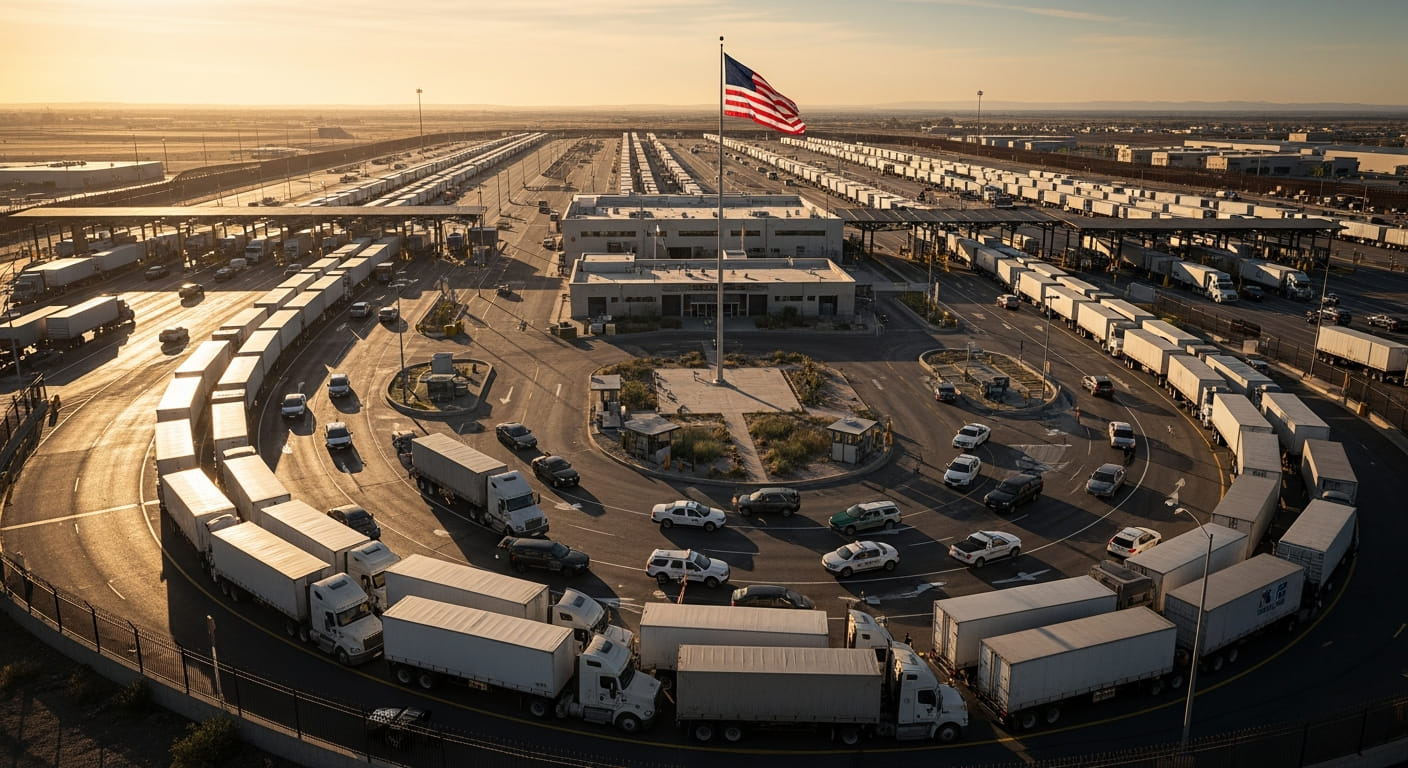
As we move further into 2026, the global trade enforcement landscape for manufacturers is characterized by a confluence of geopolitical shifts, technological advancements, and an intensified focus on ethical sourcing. The era of passive compliance is firmly behind us; proactive engagement is the new standard. U.S. Customs and Border Protection (CBP) stands at the forefront of this evolution, wielding enhanced authority and a broader mandate.
CBP’s enforcement efforts now extend far beyond ensuring accurate tariff payments. National security, consumer safety, and intellectual property rights continue to be pillars of their strategy. However, the most significant shift impacting manufacturers revolves around human rights and forced labor concerns, predominantly spearheaded by the Uyghur Forced Labor Prevention Act (UFLPA). This legislation fundamentally alters the burden of proof for importers, particularly those with supply chain touchpoints in regions associated with forced labor risks. The “rebuttable presumption” of UFLPA means that goods produced wholly or in part in China’s Xinjiang Uyghur Autonomous Region (XUAR), or by entities identified on the UFLPA entity list, are presumed to be made with forced labor and are thus prohibited from entering the U.S. market.
The broader operational environment of agencies like CBP and ICE (Immigration and Customs Enforcement) has also come under increasing public and political scrutiny in recent years. While many reports, such as those highlighted by The Guardian, the Center for American Progress, and the American Immigration Council, focus on the treatment of individuals in detention or the agencies’ overall accountability, this intense oversight indirectly reinforces a stricter enforcement posture across all of their mandates, including trade. When agencies operate under such a microscope, the imperative to rigorously enforce all applicable laws, including those pertaining to trade and human rights in supply chains, becomes paramount. This signals to manufacturers that regulatory adherence will be pursued with diligence, and any perceived lack of compliance or accountability will be met with stringent action.
Furthermore, the ArentFox Schiff 2026 Guide for Global Businesses points to a proactive enforcement trend, urging businesses to prepare for heightened scrutiny across various compliance domains. This includes not just UFLPA, but also Section 301 tariffs, anti-dumping/countervailing duties, and other trade remedies. The McMillan LLP report on Section 301 forced labor investigations further emphasizes that the net of forced labor enforcement is cast wide, impacting not only U.S. supply chains but also those of neighboring countries like Canada, illustrating the global ripple effect of these policies. For manufacturers, this means that even indirect exposure to forced labor risks, several tiers deep in the supply chain, can trigger severe consequences. The regulatory landscape of 2026 demands unparalleled visibility and control over every link in the global production chain.
For manufacturers importing goods into the U.S., the intensified enforcement climate, particularly concerning UFLPA, translates into tangible and often severe real-world impacts. The consequences of non-compliance extend far beyond simple delays; they can jeopardize entire business operations and brand integrity.
The most immediate impact is cargo detention and seizure. When CBP suspects goods fall under UFLPA’s purview, they are detained at the port of entry. Manufacturers then bear the burden of proof to demonstrate unequivocally that their products were not made with forced labor. This process is arduous, time-consuming, and often results in significant delays. Should the manufacturer fail to provide sufficient evidence, the cargo will be seized and potentially forfeited, representing a complete loss of product value.
Beyond direct cargo loss, manufacturers face substantial operational disruptions and increased costs. Detained shipments tie up capital, create warehousing expenses, and disrupt production schedules, potentially leading to breaches of contracts with downstream customers. The administrative burden of responding to CBP inquiries, gathering documentation, and engaging legal counsel adds further financial strain.
Reputational damage is another critical, yet often underestimated, consequence. In an era of heightened consumer awareness and corporate social responsibility, being publicly associated with forced labor allegations can severely tarnish a brand’s image. This can lead to decreased sales, investor divestment, and difficulty attracting and retaining talent. The public scrutiny on enforcement agencies themselves (as seen in articles discussing CBP/ICE operations) also means that enforcement actions, once taken, are less likely to be reversed without substantial, verifiable proof, and can quickly become public knowledge.
Specific industries are particularly vulnerable. Textiles and apparel, solar energy components, electronics, and certain agricultural products have been recurring targets of UFLPA enforcement. Manufacturers in these sectors must recognize their heightened risk profile and proactively implement robust compliance measures. The challenge is amplified for companies with complex, multi-tiered supply chains where visibility into upstream raw material sourcing and intermediate processing is often opaque. Ignorance of supply chain origins is no defense, and manufacturers are held accountable for the practices of their distant suppliers. Ultimately, the cost of non-compliance – in terms of financial penalties, operational paralysis, and brand erosion – far outweighs the investment in robust compliance programs.
Navigating the complexities of global trade enforcement in 2026 requires a structured, proactive approach. For manufacturers, staying compliant, especially under the shadow of UFLPA, means embedding vigilance into every facet of your supply chain.
Deep-Dive Supply Chain Mapping and Risk Assessment: Go beyond first-tier suppliers. Manufacturers must endeavor to map their entire supply chain, from raw materials to finished goods, identifying every entity involved in the production process. This includes understanding the origin of components, sub-components, and raw materials, especially those originating from or processed in regions identified as high-risk for forced labor, such as the XUAR. Tools like TradeShield AI can facilitate this by providing advanced analytics and visualization capabilities to pinpoint potential risk areas across multi-tiered supply networks, allowing for targeted due diligence.
Implement Robust Supplier Vetting and Auditing: Develop a stringent program for vetting new and existing suppliers. This should involve comprehensive questionnaires, contractual clauses mandating compliance with anti-forced labor laws, and a commitment to transparency. Regular, independent third-party audits, including unannounced visits to facilities, are crucial. These audits should not only review documentation but also assess labor practices, worker conditions, and recruitment methods, ensuring alignment with international labor standards and specific UFLPA requirements.
Leverage Technology for Enhanced Visibility and Management: Manual processes are no longer sufficient to manage the complexity of modern supply chains. Manufacturers should invest in technology solutions that provide real-time visibility, automated risk alerts, and centralized data management. TradeShield AI, for instance, offers features to track supplier information, manage compliance documentation, and monitor changes in regulatory landscapes and entity lists, significantly reducing the administrative burden and improving the accuracy of compliance efforts. Such platforms are instrumental in collecting and organizing the granular data required to rebut UFLPA’s presumption.
Maintain Comprehensive and Verifiable Documentation: The ability to provide clear, convincing evidence to CBP is paramount. Manufacturers must maintain meticulous records for every component and process, detailing the complete chain of custody for all imported goods. This includes purchase orders, invoices, bills of lading, manufacturing records, labor records, and attestations from suppliers. For UFLPA specifically, this documentation must unequivocally demonstrate that goods or components were not produced with forced labor, including proof of origin for raw materials and the complete separation of supply chains from high-risk regions. The quality and specificity of this documentation are often the deciding factors in CBP detention cases.
Establish an Internal Compliance Program and Ongoing Training: Develop and implement a formal, written trade compliance program that outlines policies, procedures, and responsibilities for all relevant personnel. Regularly train purchasing, legal, logistics, and sales teams on the latest trade regulations, forced labor risks, and internal compliance protocols. Foster a culture of compliance where every employee understands their role in preventing illegal imports. Continuous monitoring of regulatory updates and participation in industry best practices ensures that the compliance program remains effective and adapts to the evolving enforcement landscape.
Q1: What is UFLPA and why is it so critical for manufacturers in 2026? A1: The Uyghur Forced Labor Prevention Act (UFLPA) is a U.S. law that prohibits the importation of goods into the U.S. that were produced wholly or in part in China’s Xinjiang Uyghur Autonomous Region (XUAR) or by entities on a specific UFLPA Entity List, due to a rebuttable presumption that such goods are made with forced labor. It is critical in 2026 because it places the burden of proof squarely on manufacturers to demonstrate, with clear and convincing evidence, that their goods are not a product of forced labor. This requires unprecedented supply chain transparency and due diligence, extending to raw materials and distant suppliers, significantly impacting sourcing and operational strategies.
Q2: How has CBP enforcement evolved in 2026, beyond traditional tariff collection? A2: In 2026, CBP enforcement has significantly expanded its scope. While tariff collection remains a core function, the agency now places a much stronger emphasis on national security, intellectual property rights protection, consumer safety, and, most notably, human rights. The UFLPA is a prime example of this evolution, making forced labor a central concern for import admissibility. This broader mandate means manufacturers face scrutiny on multiple fronts, requiring comprehensive compliance programs that address ethical sourcing, product integrity, and geopolitical risks, alongside traditional customs requirements.
Q3: What specific documentation is required under UFLPA to rebut the presumption of forced labor? A3: To rebut the presumption of forced labor under UFLPA, manufacturers must provide “clear and convincing evidence” to CBP. This typically includes a comprehensive package of documents demonstrating the complete chain of custody of all materials and components from their origin to the finished product. Key documents include: detailed mapping of the entire supply chain (including raw material suppliers, intermediate processors, and manufacturers), purchase orders, invoices, proof of payment, bills of lading, production records, labor records, affidavits from suppliers, independent audit reports of facilities, and evidence of robust due diligence programs. The documentation must unequivocally prove that no part of the supply chain involved forced labor, especially from the XUAR or listed entities.
Q4: Can technology truly help with UFLPA compliance, or is it just another expense? A4: Technology is not just helpful, it’s increasingly essential for UFLPA compliance. Manually tracking multi-tiered supply chains, managing vast amounts of documentation, and monitoring dynamic regulatory lists is impractical and prone to error. Platforms like TradeShield AI can centralize supplier data, automate risk assessments, provide real-time alerts on regulatory changes (e.g., UFLPA Entity List updates), and manage the vast array of documents required for rebuttal. This enhances visibility, streamlines compliance processes, reduces human error, and ultimately provides a defensible audit trail to CBP, making it a strategic investment rather than just an expense.
The intricate world of global trade in 2026 demands more than just adherence; it requires foresight, diligence, and a commitment to ethical operations. For manufacturers, understanding and proactively managing the evolving enforcement landscape, particularly around CBP’s expanded role and the stringent requirements of UFLPA, is paramount to maintaining business continuity and brand reputation. Don’t let compliance complexities hinder your global ambitions.
Take the first step towards securing your supply chain and ensuring compliance. Get a free, comprehensive scan of your trade operations.
Essential Global Trade Enforcement compliance guidance for 2026 importers and freight forwarders.
Essential Global Trade Enforcement compliance guidance for 2026 importers and freight forwarders.
Essential Sanctions & OFAC compliance guidance for 2026 importers and freight forwarders.
Sanctions & OFAC compliance guidance for 2026.