
Global Trade Enforcement Compliance Guide 2026
Essential Global Trade Enforcement compliance guidance for 2026 importers and freight forwarders.
Essential Global Trade Enforcement compliance guidance for 2026 importers and freight forwarders.
By TradeShield AI Analyst Team March 2026
The global trade landscape in 2026 is anything but calm. Businesses navigating international supply chains face an increasingly complex and aggressive enforcement environment, where compliance is no longer a mere formality but a critical component of operational resilience and financial viability. From the escalating scrutiny of forced labor practices under the Uyghur Forced Labor Prevention Act (UFLPA) to broad-ranging customs detentions and the ever-present threat of sanctions, the stakes have never been higher for manufacturers, logistics providers, and importers worldwide.
In this climate, understanding the nuances of global trade enforcement, particularly the proactive stance of U.S. Customs and Border Protection (CBP), is paramount. The consequences of non-compliance extend far beyond fines, touching upon reputational damage, significant operational delays, and even potential criminal liabilities. This article will dissect the current enforcement trends, highlight the acute risks posed by UFLPA, and demonstrate how advanced AI compliance tools are becoming indispensable shields against a turbulent future.
As we navigate March 2026, the global trade enforcement landscape is characterized by a persistent and intensifying commitment to ethical sourcing, national security, and fair trade practices. Governments, particularly the United States, are leveraging sophisticated data analytics and expanded authority to identify and interdict illicit trade flows, with CBP at the forefront of these efforts. The regulatory environment has seen a tightening of various statutes, including the Uyghur Forced Labor Prevention Act (UFLPA), sanctions regimes, and export controls.
A central pillar of this enforcement surge remains the UFLPA, which came into full effect in June 2022 and has only gained momentum. The law establishes a rebuttable presumption that any goods mined, produced, or manufactured wholly or in part in China’s Xinjiang Uyghur Autonomous Region (XUAR) are made with forced labor and are thus prohibited from entry into the U.S. This presumption also extends to goods from entities identified on the UFLPA Entity List, regardless of their origin within China, or goods connected to programs targeting XUAR minorities. The scope is vast, impacting not just direct imports from Xinjiang, but any product with even a single component or material traceable to the region. The principle of “guilty until proven innocent” places an immense burden of proof on importers.
While there have been discussions and political questions in the past regarding the vigor of UFLPA enforcement, such as concerns raised in 2023 about whether a future administration might “shelve” the law (SOURCE 4), the legal framework remains firmly in place. The underlying U.S. interest in ending abuses against Uyghurs (SOURCE 6) and other ethnic minorities ensures that the spirit of the law continues to influence policy and enforcement actions, regardless of specific political rhetoric. Businesses cannot afford to assume a relaxation of standards; the risk remains that enforcement can and will be applied with full force.
CBP’s enforcement actions extend beyond UFLPA. The agency continues its aggressive stance against tariff evasion, undervaluation, misclassification, and intellectual property rights infringements. Moreover, the broader capabilities and reach of agencies like CBP and Immigration and Customs Enforcement (ICE) underscore the extensive power wielded by the U.S. government. Reports, though often focused on immigration enforcement, highlight the profound impact these agencies have on individuals and processes under their purview. For instance, reviews of 911 calls from ICE detention facilities have revealed “abject cruelty” and disturbing conditions (SOURCE 1), while other incidents have documented severe medical neglect, such as a Palestinian woman hospitalized after a seizure (SOURCE 3). The Center for American Progress even critiqued the Trump administration’s ICE and CBP as a “threat to Americans,” urging Congress to ensure DHS adheres to the law and adopts “commonsense reforms” (SOURCE 2). These examples, while not directly about trade goods, illustrate the powerful and often unforgiving enforcement machinery that businesses face when their shipments are subjected to CBP scrutiny. This aggressive posture translates directly into heightened vigilance and stringent requirements for trade compliance.
The financial implications of this robust enforcement are staggering. Beyond the immediate costs of detention, companies face potential Section 301 tariffs and other punitive duties. For example, Section 301 investigations, often linked to forced labor concerns or unfair trade practices (SOURCE 5), can levy significant additional tariffs, impacting Canadian and other global supply chains connected to targeted regions. The cumulative value of goods detained under UFLPA alone has already reached hundreds of millions of dollars, with industries ranging from solar energy to apparel and electronics experiencing substantial disruptions. In 2026, we anticipate continued, if not increased, detentions, leading to substantial financial exposure and operational headaches for those unprepared.
The intensified global trade enforcement climate of 2026 has translated into tangible, often crippling, impacts on importers and freight forwarders. The UFLPA, in particular, has become a formidable gatekeeper, transforming routine cargo movements into high-stakes gambles. Shipments previously cleared without issue are now subject to immediate detention by CBP, often on the mere suspicion of a connection to forced labor.
The most immediate business impact is severe operational disruption. When a shipment is detained, it effectively disappears into a regulatory black hole, sometimes for weeks or even months. This leads to missed delivery deadlines, unfulfilled orders, and damaged customer relationships. For manufacturers relying on just-in-time inventory, a detained critical component can bring entire production lines to a standstill, incurring massive production losses and forcing costly emergency resourcing from alternative, often more expensive, suppliers. Freight forwarders, caught in the middle, face the logistical nightmare of managing stalled cargo, accruing demurrage and storage fees, and dealing with frustrated clients.
A particularly acute example comes from the solar industry, where crystalline silicon photovoltaic cells and modules have been a primary target under UFLPA. Companies importing these components have seen multi-million dollar shipments held at ports, forcing them to re-evaluate their entire supply chain, sometimes from Tier 1 to Tier 4 suppliers, to prove that no forced labor was involved. The sheer complexity of tracing polysilicon, the raw material, through multiple processing stages and global geographies makes this an almost impossible task without specialized tools.
The financial exposure for businesses is immense. Beyond the value of the detained goods themselves, which can easily run into millions, companies face a cascade of additional costs. These include port storage fees, demurrage charges, legal expenses for responding to CBP inquiries, and, if forced labor is confirmed or rebutting the presumption fails, the cost of re-exporting or destroying the cargo. Lost sales and market share due to delivery failures further erode profitability. Furthermore, the reputational damage from being associated, even indirectly, with forced labor practices can be long-lasting and devastating, impacting consumer trust and investor confidence. Investors are increasingly scrutinizing Environmental, Social, and Governance (ESG) factors, making supply chain ethics a critical concern.
For freight forwarders, the risk extends to potential liability. While often acting as agents, their involvement in the documentation and movement of goods means they are often the first point of contact for CBP and can be implicated if insufficient care was taken in vetting cargo or providing accurate information. The intricate web of global supply chains means that a single point of failure in compliance can unravel an entire logistical operation, underscoring the necessity for every stakeholder to be proactively engaged in risk mitigation.
Customs brokers and internal compliance teams are on the front lines of this intensified enforcement battle, operating under immense pressure and facing significant shifts in liability and responsibility. The “reasonable care” standard, always a cornerstone of U.S. customs law, has taken on a far more demanding interpretation in the context of UFLPA and other human rights-based enforcement actions. Importers are expected to know their supply chains with a granular level of detail previously unprecedented, and brokers are intrinsically linked to this burden.
The liability shift is palpable. While the ultimate legal responsibility often lies with the importer of record, customs brokers can be held accountable for aiding and abetting violations, or for failing to exercise reasonable care in preparing and submitting entry documentation. This means that if a broker knowingly or negligently processes a shipment that is later found to violate UFLPA or other regulations, they face not only reputational damage but also potential fines and penalties, and even the suspension or revocation of their license. This increased scrutiny places a heavy onus on brokers to conduct their own robust due diligence, even on information provided by their clients.
Documentation requirements have reached forensic levels. Proving that goods are not made with forced labor demands an unbroken chain of evidence from the raw material source through every stage of production, manufacturing, and transport. This includes detailed Bills of Materials (BOMs), purchase orders, production records, labor records, and even geological surveys for raw materials. Collecting and verifying this information from multiple tiers of international suppliers, many of whom may be reluctant or unable to provide such detailed data, is an arduous and often impossible task. Customs brokers and compliance teams are now spending exponentially more time gathering, analyzing, and validating documentation, diverting resources from other critical functions.
Furthermore, the risk of CBP audits has surged. The agency is dedicating more resources to targeted audits focused specifically on UFLPA compliance, origin declarations, and comprehensive supply chain vetting. These audits are intrusive and time-consuming, requiring companies to open their books, records, and supply chain data for extensive review. A finding of non-compliance during an audit can lead to retroactive penalties, future heightened scrutiny, and even the “red-flagging” of an importer, resulting in more frequent and rigorous inspections for all future shipments. For compliance teams, this means constant vigilance, proactive preparation for audits, and the need to maintain an impeccable, easily accessible audit trail. The complexity and high stakes demand that customs brokers and in-house compliance professionals evolve their strategies from reactive problem-solving to proactive, preventative risk management.
Navigating the treacherous waters of global trade enforcement in 2026 demands a proactive, multi-faceted approach. Here are five essential steps for businesses to fortify their compliance posture:
The most significant global trade enforcement risks in 2026 revolve around the aggressive enforcement of the Uyghur Forced Labor Prevention Act (UFLPA), leading to increased CBP detentions of goods suspected of forced labor connections. Beyond UFLPA, businesses face heightened scrutiny on accurate customs classification, valuation, and origin declarations, alongside an ever-evolving landscape of geopolitical sanctions and export controls impacting specific countries and entities.
Companies found in violation of trade regulations face substantial fines and penalties. For customs violations, these can range from civil penalties for negligence (up to 100% of the dutiable value of the merchandise) to gross negligence (up to 250% of the dutiable value) and even fraud (up to the full domestic value of the merchandise). Beyond monetary fines, businesses incur significant costs from lost value of detained or seized goods, storage and demurrage charges, and expenses for re-export or destruction of prohibited cargo, with severe cases potentially leading to criminal charges.
TradeShield AI offers a comprehensive suite of tools designed to mitigate global trade enforcement risks. It provides real-time screening of all trading partners against OFAC, EU, UN, and other international sanctions lists, flagging potential violations instantly. Our platform ensures accurate 10-digit HTS code classification for duty optimization and compliance, automatically calculates and tracks Section 301/232 surcharges, and generates automated, audit-ready PDF compliance reports to streamline your record-keeping and regulatory submissions. Additionally, it helps identify and flag potential UFLPA-related supply chain risks by analyzing origin data and entity lists.
Importers must act decisively to fortify their compliance posture.
Ready to protect your shipments? Run a free compliance scan with TradeShield AI and get your full risk report in 60 seconds.
Essential Global Trade Enforcement compliance guidance for 2026 importers and freight forwarders.
Global Trade Enforcement compliance guidance for 2026.
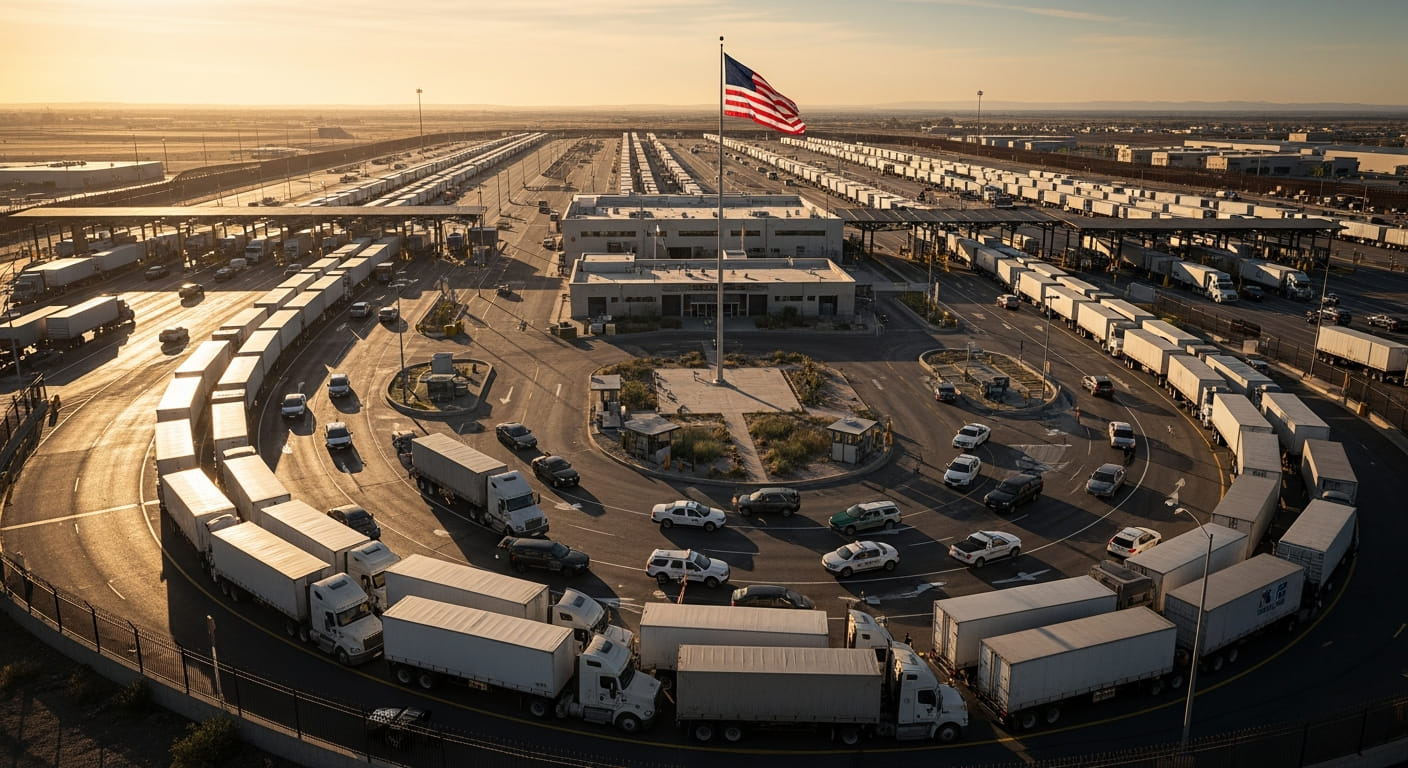
Essential Sanctions & OFAC compliance guidance for 2026 importers and freight forwarders.
Sanctions & OFAC compliance guidance for 2026.